Almost everyone has a story about a sofa that sagged within a year or a table that started wobbling the moment guests leaned on it. These letdowns usually aren’t bad luck—they’re the result of overlooked details in materials and construction. High-quality furniture often costs more upfront, but it frequently pays for itself over time by sparing you the cost and hassle of early replacement. Quality furniture is an investment, not a disposable purchase, and once you understand a few core indicators—materials, joinery, comfort, and warranties—that judgment becomes something any shopper can master, expert or not.
Why Furniture Quality Matters
Understanding Furniture Materials: What’s Beneath the Finish
Rather than relying solely on price tags or popular quality furniture brands, you can learn to judge how any piece is actually built.
Materials are the foundation of durability. Solid hardwood, such as oak, maple, or ash, tends to hold up far better over time than particleboard or low-grade MDF, particularly when it’s kiln-dried to minimize warping. Engineered wood isn’t inherently a bad choice—it works fine for interior panels—but it becomes a concern when used in structural frames that bear real weight. I once compared a solid oak kitchen table to a particleboard version in a busy household; after five years, the oak table showed little more than surface wear, while the particleboard piece had swollen edges and joints loosening from daily use.
Metal frames should show consistent welds and sturdy connections, without the uneven finishes that hint at rushed manufacturing. For upholstery, tightly woven fabrics with higher rub counts wear better under regular use, while natural fibers like wool offer breathability but sacrifice some durability compared to synthetics. Foam quality matters too: higher-density, high-resilience foam holds its shape far longer than cheaper alternatives, and spring systems—like eight-way hand-tied constructions—add support that lasts.
Construction Quality: How Furniture Is Put Together
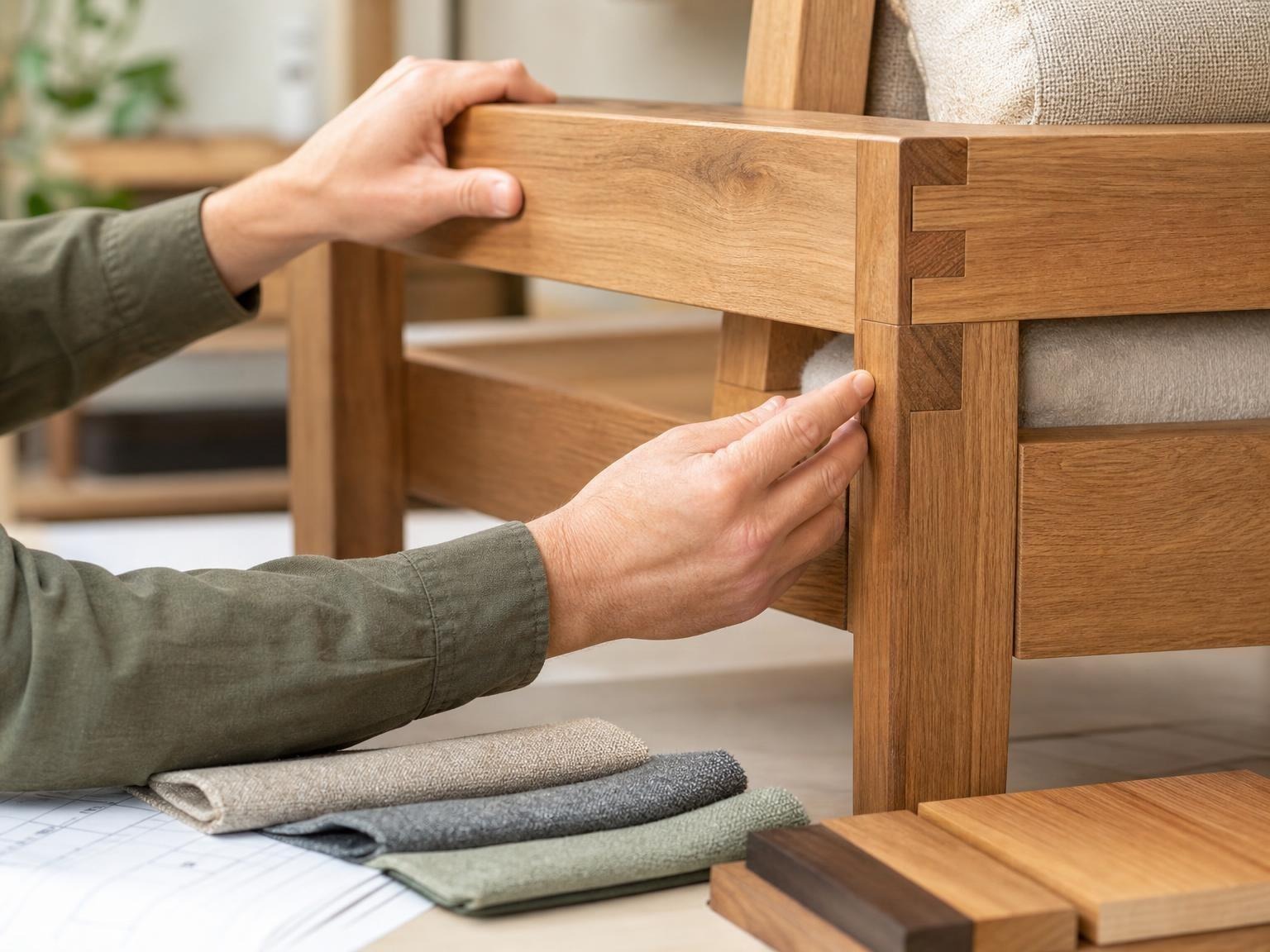
Beyond materials, joinery tells you a lot about craftsmanship. Dovetail, mortise-and-tenon, and doweled joints signal skilled construction, while staples or exposed screws held together with thin glue tend to loosen over time. Reinforced corner blocks in sofa and chair frames add crucial stability as well.
A few quick checks can help you evaluate furniture in-store:
- Gently shake a table or lean on a chair to test for wobbling.
- Open and close drawers to check for smooth, aligned movement.
- Inspect hinges and slides for solid metal and soft-close mechanisms.
Flat-pack furniture assembled mainly with cam locks may be convenient, but pre-assembled pieces with proper joinery typically hold up longer under everyday use.
Comfort and Ergonomics: Quality You Can Feel
Durability doesn’t count for much if furniture isn’t comfortable to use. Seat height, depth, and back support should match your body and how you actually plan to use the piece. Test furniture the way you’ll really use it—sit, recline, and shift positions for several minutes instead of giving it a quick perch. Some well-made pieces feel firm at first but soften appropriately with use, while overly soft cushions may compress quickly and lose their support within months.
Signals of Reliability: Warranties, Reviews, and Transparency
There are non-physical cues worth paying attention to as well. Clear warranty terms covering frames and springs often reflect genuine confidence in a product’s durability, while vague marketing language should prompt a few follow-up questions. Check return policies and repair options too, since replaceable covers or accessible repairs can extend a piece’s life considerably. When reading online reviews, look for consistent patterns over time rather than getting swayed by a handful of extreme opinions.
Matching Furniture Quality to Your Lifestyle and Budget
Your usage patterns should guide where you invest. High-traffic high-use pieces—like a family sofa or the chair you sit in at your desk every day—deserve more investment than furniture that guests use once in a while. Thinking in terms of cost per year of use rather than sticker price alone helps you avoid the false economy of cheap items that need frequent replacing.
Bringing It All Together: Making Confident, Informed Choices
Furniture quality really comes down to four pillars: solid materials, sound construction, genuine comfort, and trustworthy reliability signals. Once you understand how quality is built, you can shop with confidence in any showroom or online store, turning what used to feel like guesswork into a skill that serves you well for years to come.