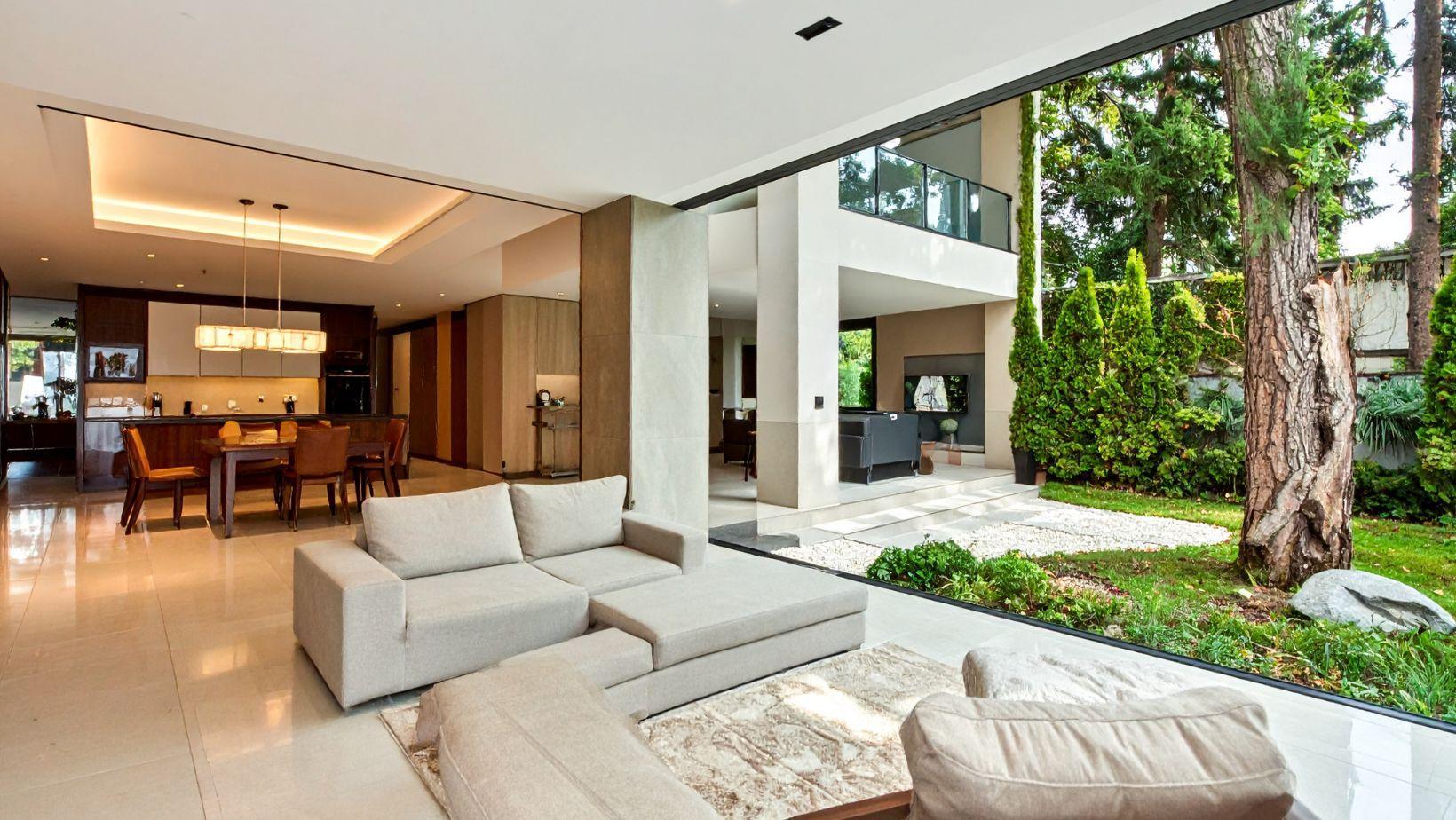
Sterile minimalism is finally fading. Homeowners want the calm of space without the cold, showroom feeling that made the style forgettable. The fix isn’t adding more — it’s choosing fewer, richer layers: a boucle chair against limewashed plaster, a sculptural pendant throwing warm shadows across travertine. Bold texture and considered lighting turn restraint into something that actually feels expensive, not empty.
That combination — minimalist interiors with bold textures — comes down to matching material to light source, not just picking pieces you like. Working with a professional interior designer in houston can help align structural elements, material choices, and custom illumination to make a space feel balanced rather than flat.
Why Warm Minimalism Is Winning
Designers have spent 2026 walking back stark minimalism. There has been a rise in searches for tangible materials such as sandstone and Venetian plaster as homeowners seek to find warmth without any mess, according to Houzz’s newest trend data. This does not mean it is against minimalism; it is just a form of balancing. The space can remain minimalist but feel lively through the heavy materials used. That’s the real brief behind styling minimalist spaces now.
Layer Three Textures, Not One
- Structure: exposed stone, poured concrete, or lime-washed walls
- Touch: boucle, raw silk, or linen fabric
- Reflection: brushed brass, smoked glass, or plaster
One matte surface, one soft surface, one reflective surface – this proportion will keep a space textured without being cluttered. Don’t include a fourth texture because the key to each being meaningful is restraint.
Match Light Temperature to Material
Warm materials need warm light. Matte finish plaster and bare wood do not reflect light but absorb it, and therefore are best when illuminated by a source between 2700K–3000K with a CRI higher than 90, which is what the U.S. Department of Energy recommends for color accuracy. Shiny materials such as brass or glass are able to cope with crisper light while still preserving warmth somewhere else in the room.
The Texture-Light Reflectance Table
Texture and Light Reflectance Values Table
Below is the way five commonly used premium textures react to light depending on their reflectance values and color rendering characteristics:
|
Texture |
Light Reflectance |
Best Range of CCT |
Light Fixtures |
|
Limewashed Plaster |
Low (10%-20%) |
2700K |
Wall Wash Sconce |
|
Raw Walnut |
Low to Medium (15%-25%) |
2700-3000K |
Warm Pendant |
|
Boucle & Heavyweight Linen |
Medium (25%-40%) |
3000K |
Ambient Light |
|
Travertine |
Medium to High (35%-50%) |
3000-3500K |
Accent Light |
|
Brushed Brass |
High (over 60%) |
3000–4000K |
Spot or accent light |
Avoid the Single Accent Trap
Most “minimalist” rooms fail by treating texture as one hero piece — a single rug, one statement lamp — surrounded by flat surfaces. While companies such as Bilal Rehman Studio do distribute texture on three surfaces: floor, wall, and lighting fixture, so that no one surface has to bear all of the weight. That layered discipline is what actually defines minimalist interiors with bold textures, not more objects, but each one carrying its own light.
Natural materials do more than look good under the right light — research from the Global Wellness Institute links tactile, nature-linked materials to measurable reductions in stress. That’s a functional argument for texture, not just an aesthetic one. Whether curated individually or developed alongside an expert interior designer in houston, taking a layered approach ensures every material gets highlighted properly.
FAQs
How is minimalistic design different from warm minimalistic design?
While maintaining the restraint characteristic of minimalism, warm minimalism uses a different approach to the color scheme by replacing white hues with natural materials such as plaster, wood, and wool.
How many textures are needed in a minimalist interior?
Three is the workable ceiling: one structural, one soft, one reflective. A fourth usually reads as clutter rather than depth.
What color temperature works best for textured minimalist spaces?
The majority of matte and natural materials appear their most luxurious from 2700k to 3000k with a CRI of 90 or more.
Can bold textures work in a small minimalist space?
Indeed — put all your textures on only a few surfaces, such as one wall or one piece of furniture, to make the space airy yet considered.
Is minimalism out of fashion in 2026?
No, but the starkly austere type is. The designers of today are replacing it with rich and tactile rooms that retain the simplicity underneath.
Mastering Modern Minimalist Styling
An interior does not necessarily require more things to be complete — it requires the right few things to make an impact. Texture and light considered together turn a simple space into a completed one, and not vice versa. Forget about following trends and follow the logic of materials instead: what should reflect, absorb, and deserve lighting fixtures on its own. This is how an expensive interior becomes an incomplete one.