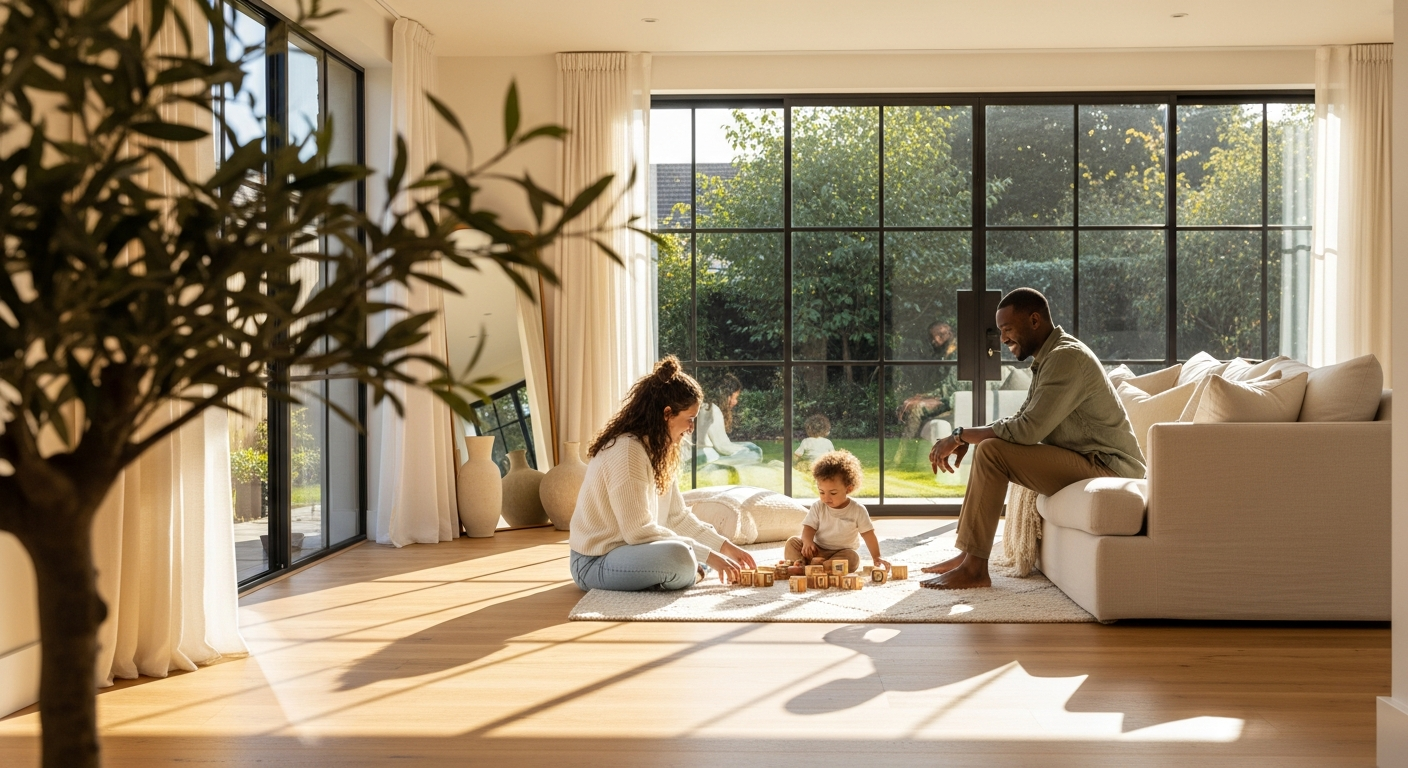
A family home can feel crowded, dim, or flat even when there’s plenty of square footage to go around. More often than not, the real issue isn’t size; it’s how light moves through the space. Recent buyer research found that 44% of people would actively choose a smaller, brighter home over a larger, dimmer one. That stat alone tells you how much daylight matters.
Natural light affects far more than how pretty your rooms look in photos. Bright spaces tend to feel larger, calmer, and genuinely easier to use throughout the day. Industry research also shows that homeowners place a high value on upgrades that improve everyday comfort and satisfaction. And the good news? You can bring significantly better light into your home without sacrificing energy efficiency.
Why Natural Light Changes the Way Your Home Feels
Mood, comfort, and daily well-being
Bright spaces generally feel more uplifting and less boxed-in. If you’ve ever noticed how differently your kitchen feels on a sunny morning versus a cloudy afternoon, you already understand this instinctively. Families often experience living rooms, kitchens, and play areas in a completely different way when daylight has been thoughtfully optimized. Many buyers now treat natural light as a top wellness-related feature, ranking it alongside things like air quality and outdoor access.
Access to daylight also directly impacts indoor comfort beyond mood. Modern window glass styles, such as large clear panes, can help support heat control and noise reduction. Choosing the right materials can make your living area feel lighter and more welcoming, which is exactly what you want if you’ve got kids running around all day.
Why bright rooms often feel larger than they are
Light reduces visual heaviness and makes edges, floors, and surfaces easier for your eye to read. Think of it this way: a dark corner essentially disappears from your perception of the room, making everything feel smaller and more cramped. That optical improvement helps explain why better daylight can genuinely alter your perception of space. Reflective materials like mirrors, polished metal, and glass can bounce light around the room, making tight areas feel noticeably more expansive.
Perceiving more space changes how you interact with your home on a daily basis. This helps explain why many buyers, including older homeowners, often favor brightness over extra square footage. Enhancing light levels is typically cheaper and more effective than knocking down a wall or adding an extension, too.
The family-home advantage
Better daylight helps multi-use rooms work harder for a busy household. Breakfast nooks, homework zones, and shared living spaces become far more flexible when they’re naturally bright. Picture a dining table that doubles as a craft station in the afternoon; good light makes that transition feel seamless rather than forced. Architects often use skylights and large atriums to reimagine family residences as highly functional, light-filled interiors.
This flexibility is especially useful in open-plan homes where families gather often. Installing large glass panels allows more daylight to enter the space, lessening the need for artificial lighting and creating a more welcoming indoor environment. The result is a home that works with your routine, not against it.
Using Design to Bring More Daylight Into Everyday Spaces
Surface choices that reflect light
Light wall colors, soft-sheen finishes, and pale wood flooring (think white oak or maple) act as excellent built-in reflectors. You’d be surprised how much you can brighten a dim corner simply by swapping dark, matte finishes for materials that actively bounce daylight around the room.
Glass, mirrors, and glossy tile also help bounce light efficiently, but they should be used with some restraint. Designers often favor reflective compositions that soften architectural lines while maintaining a bright aesthetic. Careful placement keeps the room glowing without creating that annoying glare spot on your TV at 3 p.m.
Furniture placement and sightlines
It sounds obvious, but you’d be amazed at how many layouts feature a bookcase or armoire blocking half a window. Keeping traffic paths clear and opting for lower-profile seating keeps the room functional without sacrificing daylight. Managing this “visual weight” aligns with modern design trends that favor streamlined, open arrangements—sometimes, moving a single heavy piece of furniture away from a window wall can transform the entire space.
Window treatments that preserve privacy without killing daylight
You don’t need to block the sun entirely to keep your family’s activities private. Sound familiar? Most homeowners default to heavy curtains and then wonder why every room feels like a cave. To combat this, many families are shifting toward window treatments that manage heat and light without completely darkening the house. Here are some practical solutions worth considering:
- Sheer curtains for soft diffusion, often paired with heavier block-out drapes for nighttime use (IKEA’s LILL panels are a popular budget option).
- Café curtains that cover just the lower half of the window, preserving privacy while letting upper daylight flood in.
- Light-filtering roller shades and solar screen fabrics can also improve insulation, keeping rooms cooler in the summer.
- Reeded or frosted adhesive film for bathrooms and street-facing rooms where you need full-time privacy.
- Layered treatments so you can adapt by time of day without the bulk of traditional curtain setups.
Choosing the Right Window Features for More Light and Better Efficiency
A bigger glass is only part of the equation
More glass can absolutely increase daylight, but the performance of that glass has a huge impact on comfort. Families need light, comfort, and temperature control to work together, not just one at the expense of the others. The Department of Energy reports that up to 30% of home electric heating and cooling energy use can be traced to heat loss and gain through windows. That’s a significant chunk of your utility bill tied directly to your windows.
Poor-performing glass can create drafts, overheating, and harsh glare, forcing your HVAC system to run overtime. That’s one reason energy-efficient windows remain a growing priority for homeowners. So when you’re thinking about bigger windows, make sure you’re also thinking about stronger thermal performance to go with them.
Understanding modern window technology
Before you start shopping for upgrades, it helps to understand a few basic technical terms so you’re not walking into a showroom completely cold. Low-E glass (low-emissivity glass) reflects heat while still letting visible light pass through. These coatings can reduce energy loss by 30% to 50% compared with clear, uncoated glass.
You’ll also see argon gas fill, an insulating gas placed between panes, and U-factor, a measure of how much heat passes through a window (lower numbers are better). ENERGY STAR says certified windows, doors, and skylights can help households save roughly $126 to $465 per year on energy bills. Not a fortune, but it adds up over a decade of ownership.
Bright interiors without sacrificing comfort
If you’re comparing replacement options, look for models designed to improve clarity, airflow, and thermal performance simultaneously. You need a solution that balances natural light with solid structural performance. For example, Brilliance windows are designed with upgraded glass systems, robust thermal barriers, and screens that enhance views without compromising performance. Their multi-chambered vinyl frames create dead-air pockets that naturally block heat transfer. Pairing these low-conductive frames with advanced double-pane glass lets you keep those expansive views without paying a premium on your monthly utility bills.
Which Window Styles Bring in the Most Light?
Different rooms call for different structural solutions to capture daylight effectively. Sliding windows are highly practical for family use in tighter spaces. They glide open easily without eating into exterior patio space or swinging into a play area (ask any parent who’s had a toddler run into an open casement window).
Privacy needs often shape the style of window you select, too. For instance, clerestory windows sit high on walls to let in daylight while preserving privacy, while bay and bow windows project outward to capture sunlight from multiple angles. So what does this actually look like in practice? The table below breaks it down.
Selecting the right unit means balancing illumination, ventilation, and family functionality. Clear glass options can help maximize sunlight across a range of frame styles, while operable windows support airflow where it’s needed most. Use this guide to match each style to your family’s needs:
| Window Style | Best For | Daylight Potential | Ventilation | Privacy Level | Notes for Family Homes |
| Picture / Fixed | Living rooms, dining rooms | High | Low | Low | Best for expansive light and views |
| Casement | Kitchens, bedrooms | High | High | Medium | Good for airflow and easy operation |
| Sliding | Bedrooms, basements | Medium | Medium | Medium | Practical in rooms with limited clearance |
| Bay / Bow | Front rooms, family rooms | High | Medium | Low-Medium | Adds depth, captures multi-angle light |
| Clerestory | Bathrooms, hallways, stairwells | Medium-High | Low | High | Strong privacy while bringing in daylight |
| Skylight | Interior zones, lofts, bathrooms | High | Low-Medium | High | Useful where wall space is limited |
When Window Replacement Becomes a Long-Term Family Upgrade
Energy savings and year-round comfort
Replacing old units can reduce drafts and help prevent the greenhouse effect you get in the summer when the sun hits your living room during peak hours. Better insulation means rooms stay more consistent throughout the day, reducing the chill that’s often felt near exterior walls in winter. Advanced replacement models are often engineered to improve thermal properties, reduce outside noise, and enhance overall efficiency.
Energy-efficient glazing also reduces the daily strain on your HVAC system, which is great news if you’re working with a tight monthly utility budget. Market data show strong, growing homeowner demand for energy-efficient windows. The upfront investment may be offset over time through utility savings and the improved comfort you’ll notice every single day.
Resale and homeowner satisfaction
Investing in better windows can deliver both emotional and financial value, and yes, there’s data to back that up. Prospective buyers frequently notice high-performance installations during home tours. Industry cost-versus-value data indicates that vinyl window replacement can recoup about 67% of project cost at resale.
But the daily lifestyle improvement might matter even more to your family right now. Bright, well-insulated spaces can make time at home genuinely more enjoyable, whether that’s reading by a window in the afternoon or hosting a weekend brunch without squinting through glare.
Signs your current windows may be holding you back
You can often spot the signs that your current windows no longer support your family’s needs. Cloudy glass, bulky frames, drafts, and hard-to-operate sashes all reduce both comfort and daylight. If glare, hot spots, or cold zones develop near the glass, everyday activities (like working at a desk or reading with the kids on the couch) can get surprisingly frustrating.
A heavy reliance on lamps during the day is another telltale sign of poor daylighting. If you’re constantly flipping on overhead lights in rooms that should feel bright, your current windows or layout may be holding the space back. Recognizing these signals early gives you time to plan upgrades that improve both light and comfort before the problems compound.
A Brighter Home Usually Feels Better to Live In
Natural light can improve mood, daily function, perceived space, and indoor comfort all at once. Good daylighting helps a house feel vibrant from sunrise to sunset, and you notice it every day you walk through the front door.
Small décor and layout changes matter, but the most lasting improvements often come from combining thoughtful design choices with high-performance window upgrades. Smart glass selection can support brighter interiors while pulling double duty on comfort and efficiency.
When you improve the way light enters and moves through your home, you’re not just changing the look of a room. You’re making everyday family life feel a little easier, a little calmer, and a lot more comfortable. Not a bad return on investment, right?