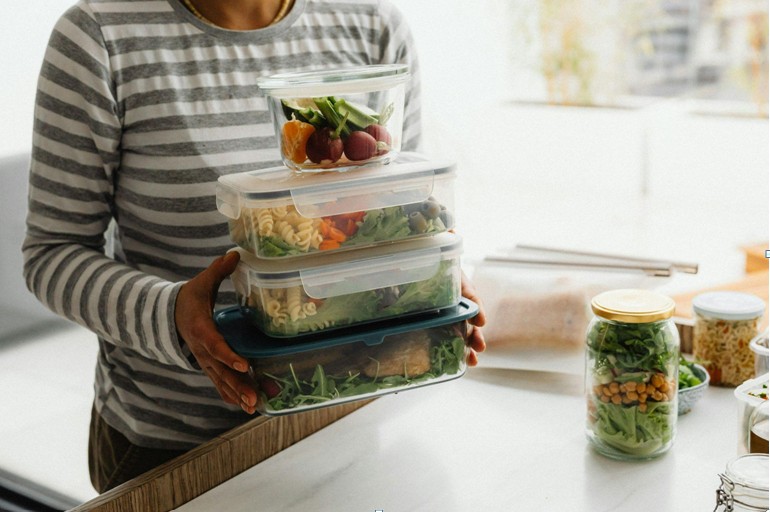
Janine Yorio didn’t learn the value of cooking ahead from a cookbook or meal planning course. It was a particularly brutal stretch of overlapping school events and volunteer commitments, added to the specific chaos that descends on a household when three children are in three different phases of growth, needs, and schedules.
She started cooking on a Sunday without any complex plan, taking advantage of a relatively quiet kitchen to produce food that would carry the family through the most demanding days of the week ahead. The difference that one Sunday made was immediate, and Yorio knew it was the first of many to come.
Make-ahead cooking sounds like an obvious strategy in theory, and in practice, it’s absolutely transformative. So many parents get stuck between knowing that batch cooking saves time and the practice of building it into a weekly rhythm. Finding a starting point in the learning curve of how to store a make-ahead meal properly breaks the common barrier to success and creates a quick, reliable family win.
Choosing the Right Dishes to Make Ahead
The dishes that make the best candidates for make-ahead cooking share a few common qualities.
- They develop deeper flavor as they rest.
- They reheat without losing their integrity.
- They are forgiving enough to serve on night two or night three without anyone at the table noticing they were not made fresh.
Braises, soups, grain dishes, and casseroles all deepen with time. A turkey and white bean chili made on Sunday is arguably better on Wednesday, just as delicate fish and anything relying on a crisp texture generally will not survive the wait. These are the dishes worth knowing well.
“I always think about what a dish is going to taste like on day three,” Yorio says. “If it’s going to be just as good, or better, that’s the one I want in my refrigerator on a Thursday night.”
Grains and Bases: The Unsung Heroes of Meal Prep
The most underappreciated make-ahead strategy is building components rather than complete meals. A large pot of farro, brown rice, or quinoa cooked at the start of the week serves as the base for grain bowls, a side for braised proteins, or the foundation of a quick fried rice when time collapses.
Roasted vegetables like sweet potato, broccoli, cauliflower, and red onion tuck into wraps, top bowls, fold into frittatas, and bulk up soups, their flavor concentrating as they rest. A whole chicken roasted on Sunday yields dinner that evening, shredded meat for tacos and quesadillas through midweek, and a carcass ready to simmer into broth by Thursday.
That single bird, handled with intention, becomes four meals. Thinking in components rather than recipes is the mental shift that makes a few hours of Sunday cooking feel genuinely abundant.
Freezer Meals: The Long Game
A well-stocked freezer is, in practical terms, a form of insurance that stands between a family and a poor dinner decision when energy and time have both run out. Soups, stews, braises, casseroles, and meatballs all freeze beautifully.
The key is portioning before freezing and storing meals in family-sized or single-serving containers rather than one large mass. Labeling both contents and date is necessary, though it often feels like it’s not, until that expiration date arrives.
“My freezer is my backup plan,” Yorio asserts. “Whenever I make a big pot of something, I automatically portion out at least one container to freeze. You’re already doing the work, so you might as well double the benefit.”
Building a freezer meal stash does not require a dedicated large-scale cooking session, though those are certainly useful. The more sustainable path forward is the habit of freezing portions consistently. Every time a soup or braise is made, a container goes in the freezer. Over the course of a month, that habit produces a reserve that covers the hardest weeks without requiring any single heroic effort.
Structuring a Sunday Prep Session
For parents who want to formalize make-ahead cooking into a weekly practice, a Sunday session of two to three hours produces a disproportionate return. The most effective method is preparing components such as cooked grains, roasted vegetables, a braised protein, a pot of soup, or beans.
Start what takes the longest first, then work on quicker preparations while the oven does the heavy lifting. By the end of two hours, a week’s worth of building blocks is ready to draw from. Yorio is clear that the session should not feel like a second job.
“If Sunday cooking starts to feel like a burden, you’ve taken on too much. The point is to make the week easier, not to add another obligation to the weekend. Keep it simple and keep it something you actually want to eat,” she says.
When Preparation Becomes a Form of Care
There is a dimension to make-ahead cooking that surpasses logistics. Preparing food in advance, like pulling a homemade meal from the refrigerator on a Wednesday when the day has been relentless, setting the table, and sitting down together, is an act of care that was started days earlier, when there was a moment of time and energy to spend.
The effort lands on the hardest night, which is exactly when it matters most. For busy parents, the table is often the one consistent point in a day that otherwise refuses to hold still. Protecting that point by making sure that what arrives on it is nourishing, homemade, and made with real ingredients is one of the more meaningful investments a family can make in its own daily life.
Make-ahead cooking solves a scheduling problem while ensuring that the meal, however rushed the day around it, still reflects the intention and care that families deserve to sit down to every night. In the end, the greatest thing a parent can put on the table is the quiet, consistent proof that feeding the people they love was worth planning for.
Janine Yorio is a passionate home cook, devoted mother of three, and community volunteer based in Overland Park, Kansas. Through her blog, she shares wholesome recipes, practical kitchen tips, and a genuine belief that meals made with love and the best ingredients available can nourish both the body and the soul.