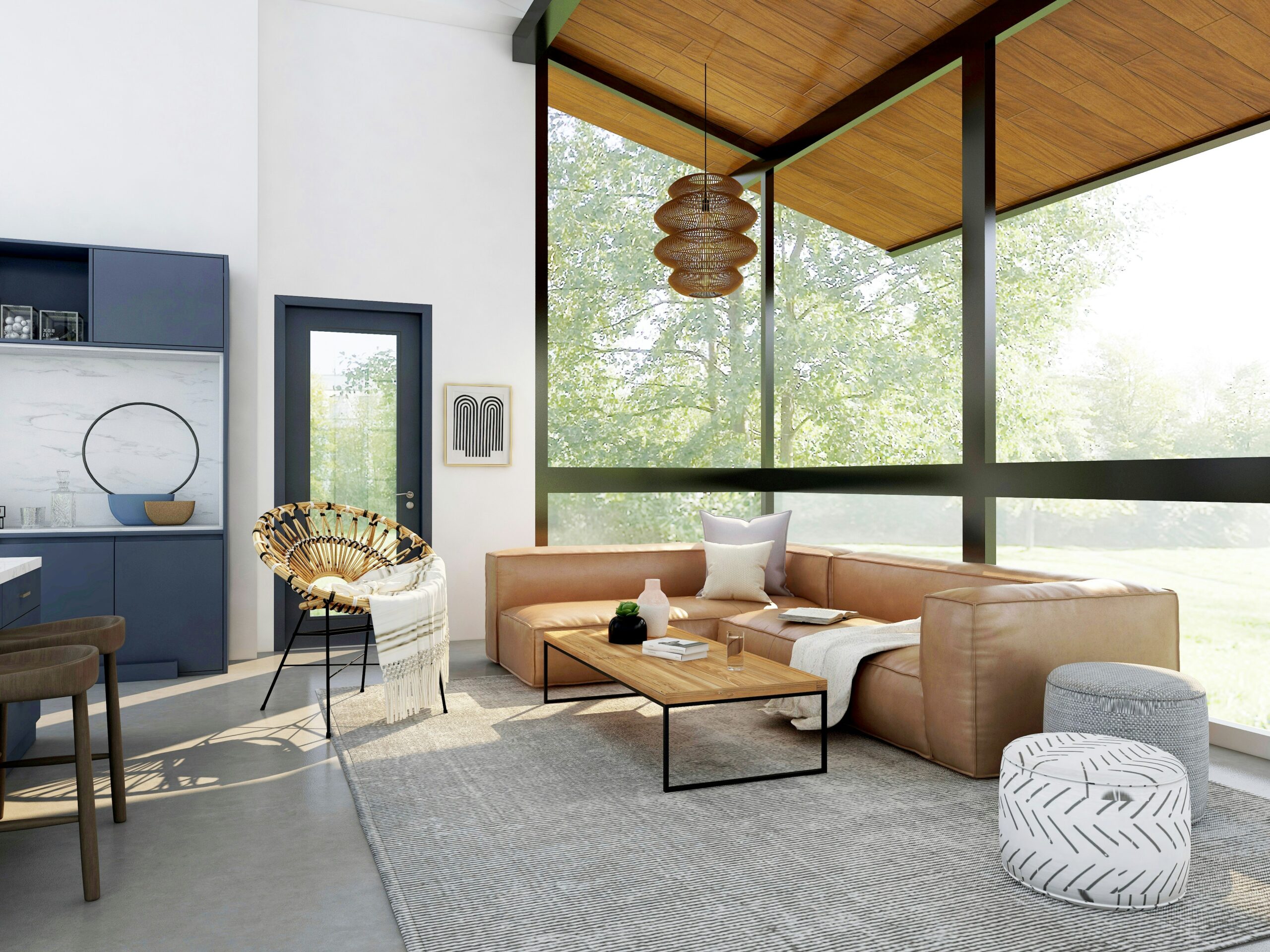
Creating a home that feels both thoughtfully styled and genuinely lived-in is one of the biggest challenges in modern interior design. It’s easy to fall into the habit of designing for aesthetics alone—spaces that look perfect in photos but feel impractical in everyday life. A home should be personal, warm, and comfortable, not a place where you hesitate to use what’s around you. By focusing on pieces that balance style and function such as everyday media furniture—you can create a space that not only looks refined but also supports how you live each day.
The conflict most homeowners face is the battle between aesthetics and utility. We spend months agonising over the exact shade of “Greige” for the walls, only to have the entire look compromised by a clunky, plastic thermostat, a tangled mess of charging cables, or a bruised-white, corrugated radiator that looks like it belongs in a 1990s office block.
These “functional” parts of our home – heating, storage, and lighting – are too often treated as afterthoughts or necessary evils. That’s why the secret to high-end design lies in “Invisible Comfort”: the art of designing with intention by selecting utilitarian items that don’t just perform a job, but actively enhance a room’s aesthetic.
Establishing the “Red Thread”
In Scandinavian design, there is a beautiful concept known as röda tråden, or the “red thread”. It refers to the consistent, underlying theme that binds a home together. It’s the invisible logic that ensures a Victorian terrace doesn’t feel like a confusing patchwork of styles as you move from the hallway to the kitchen. When you establish your red thread, you create a sense of calm and cohesion that makes a house feel like a singular, well-thought-out entity.
But establishing this thread doesn’t mean every room has to be identical. Instead, it involves choosing a core philosophy – be it Industrial, Victorian, or Scandi-Minimal – and weaving it through your choices of materials and fixtures. Think of your hardware, switches, and taps as the “jewellery” of the home. Just as a simple outfit is elevated by a quality watch or a pair of earrings, a room is elevated by its accents. If you’ve chosen an antique brass finish for your kitchen cabinet handles, carrying that warmth through to the door hinges in the living room and the light switches in the bedroom creates a subtle, professional-grade flow that the eye picks up on, even if the brain doesn’t immediately register why the space feels so harmonious.
Functional Focal Points: The New Statement Pieces
The modern design movement is shifting away from hiding our essentials. We no longer want to box in our boilers or stash our books behind heavy, opaque doors. Instead, we’re celebrating them. This shift towards “functional focal points” allows for a more open, airy feel, particularly in homes where space is at a premium.
Take, for example, open shelving and kitchen storage. By using reclaimed wood or sleek steel brackets, the storage itself becomes a wall feature. A well-organised larder or a “kitchen triangle” layout that uses beautiful copper cookware as a hanging display turns the act of cooking into a visual experience. It’s all about making the mundane magnificent.
This philosophy is perhaps most impactful when applied to architectural heating. For decades, the standard approach was to hide radiators behind bulky wooden covers which, while decorative, often blocked significant amounts of heat. Today, we’re seeing a resurgence in the radiator as a bona fide design icon. Upgrading to high-quality column radiators allows homeowners to maintain a period-correct look, perfect for those undertaking Victorian or Georgian renovations who want to honour the home’s history with an antique aesthetic.
Or for those leaning into a modern or “warm minimalist” style, a sleek, anthracite vertical column radiator can act as a piece of industrial art in a kitchen-diner. These vertical solutions are particularly brilliant for small spaces or rooms with limited wall real estate, such as hallways or bathrooms. Instead of losing a metre of floor space to a traditional horizontal unit, a vertical statement piece draws the eye upwards, emphasising the ceiling height and providing a powerful heat output without the visual clutter.
Light, Colour, and Atmosphere
Once your statement fixtures are in place, the way they interact with light and colour determines the overall mood of your home. When selecting your base colour – the primary neutral that will run through your home – consider how it will reflect off your chosen finishes. A soft, chalky off-white will drink up the warmth of brass or copper ironmongery, whereas a cool, blue-toned grey will make chrome or matt black hardware feel sharper and more contemporary.
The impact of finishes cannot be overstated. In a truly cohesive home, the metal finishes of your door handles, window stays, and light switches should speak the same language. This doesn’t mean they must be identical, but they should be tonal cousins. For instance, pairing aged bronze switches with dark oak flooring creates a grounded, historic feel. By ensuring your hardware matches your lighting fixtures, you can eliminate “visual noise”. And it’s this lack of distraction that creates invisible comfort – the feeling that everything is exactly where it should be without the eye being snagged by a mismatched plastic fitting.
What’s more, by using light to define zones, you can create “rooms within rooms” without needing physical partitions. A well-placed, oversized floor lamp over a velvet armchair immediately signals to the brain that this is a place for rest. You aren’t just decorating a corner; you’re engineering an atmosphere that guides how you use the space.
Smart Living: Quality Over Quantity
One of the core tenets of any timeless living space is the rejection of “fast interiors”. In an era of disposable flat-pack furniture and hollow-core doors, there is a quiet power in investing in pieces that are built to last decades. This is where the marriage of engineering and aesthetics pays off.
Choosing solid materials – be it natural stone worktops, solid wood flooring, or heavy-duty steel fixtures – is a decision rooted in sustainability. These materials possess a tactile quality that synthetic alternatives simply cannot replicate. It’s this investment in the fabric of your building, the things that are permanent or structural, that creates a legacy.
And remember, a well-crafted brass tap or a hand-forged door bolt isn’t just a ‘now’ purchase; it’s an anchor for your room that will age gracefully, developing a unique patina and character over time. With this slow design approach, you can ensure your home feels more authentic and substantial with each passing year.
Creating Your Own Invisible Comfort
Ultimately, a well-coordinated home is one that serves its inhabitants. It should be a place where the invisible comfort of efficient living and smart storage meets the visible joy of beautiful design. When every detail is chosen with intention, the result is a space that feels effortlessly cohesive.
If you’re feeling overwhelmed by a full renovation, start small. Look at a single room and identify the pain points – those purely functional items that currently disrupt your aesthetic. Swap out a dated light fixture for a statement pendant, or replace a generic, flimsy door handle with a solid, tactile alternative. By turning your utilitarian necessities into statement features, you don’t just improve how your home looks; you improve how it feels to live in it.