Cleaning Tips and Routines From Home-Hearted.com opens with one clear claim: small, consistent actions beat occasional marathon sessions. Readers who adopt ten-minute daily habits and targeted weekly blocks reduce deep-clean time by measurable amounts. This article lays out practical routines, room-focused priority checklists, and the right tools so homeowners spend less time cleaning and more time living. Tone is practical and confident: recommendations reflect recent Home-Hearted research and tested household tactics that scale from studio apartments to family homes.
Key Takeaways
- Daily 10–20 minute cleaning routines significantly reduce overall cleaning time and prevent weekend overload.
- Focus daily tasks on making beds, clearing surfaces, washing dishes, wiping bathrooms, and decluttering to maintain order.
- Implement a weekly cleaning schedule with specific chores assigned to each weekday for efficient task management.
- Prioritize cleaning kitchens and bathrooms first using room-specific checklists to enhance health and aesthetic appeal.
- Keep a minimal set of essential cleaning tools stored conveniently to encourage consistent use and streamline routines.
- Use timers and storage solutions like caddies to maintain cleaning habits and avoid burnout, ensuring smoother daily upkeep.
Efficient Daily And Weekly Routines You Can Actually Stick To
Fact first: doing a 10–20 minute ritual each day cuts weekly cleaning time by roughly half for most households. Start with a short list: make beds, clear countertops, run the dishwasher or wash a sink of dishes, wipe bathroom surfaces, and collect clutter in a laundry or trash bag for redistribution. When done every day, those five tasks prevent dirt and disorder from growing into a weekend problem.
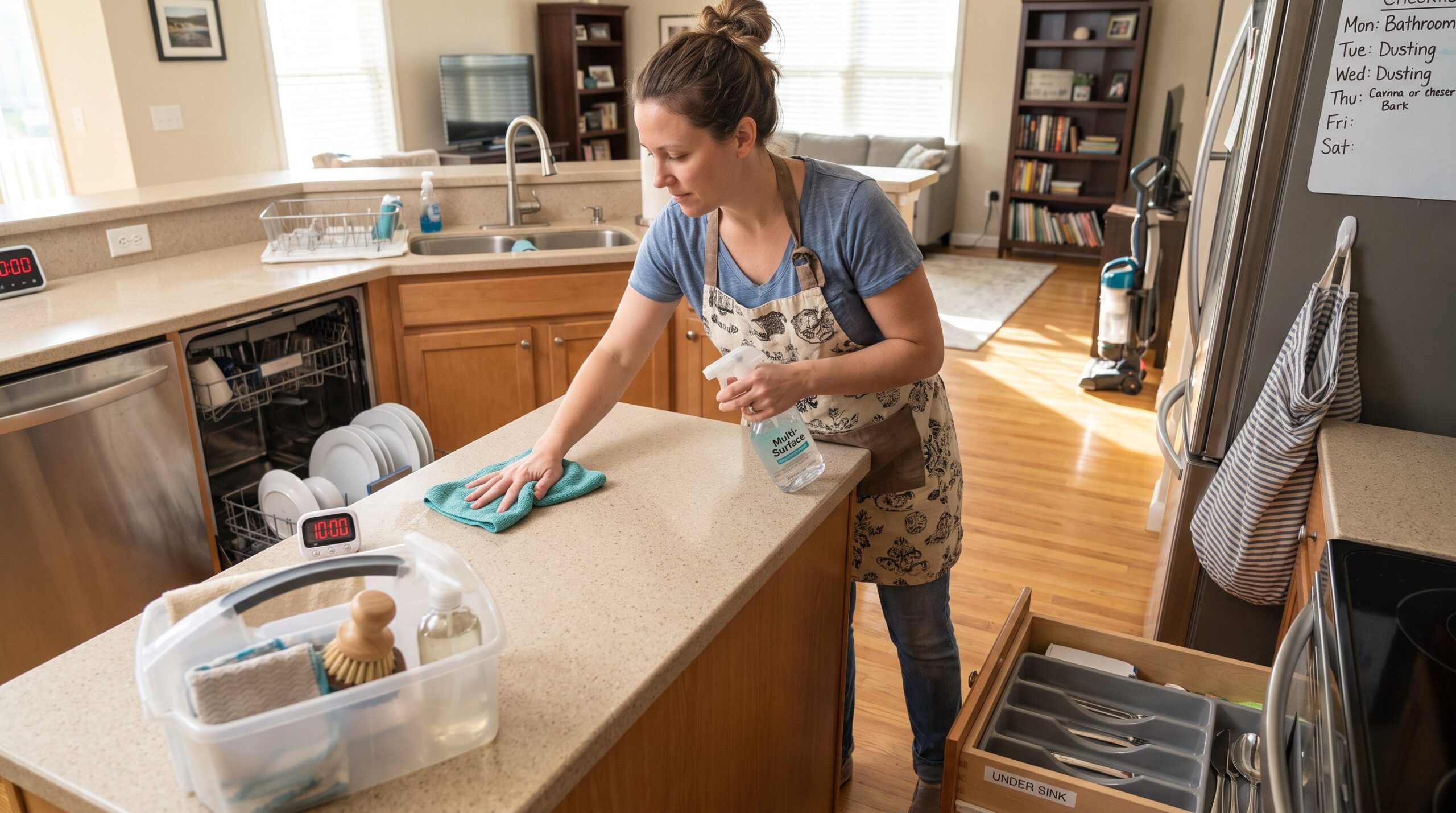
How to schedule it: use two daily windows, morning (10 minutes) and evening (10–15 minutes). In the morning, focus on beds and kitchen reset so surfaces are ready for the day. In the evening, the routine targets dishes, a counter wipe, and a quick sweep of high-traffic zones. A 10-minute kitchen timer creates urgency and makes the habit repeatable: many households report higher adherence when a timer is visible.
Weekly structure: assign specific tasks to weekdays, bathrooms Monday, dusting Tuesday, vacuuming Wednesday, floor mopping Thursday, linen and laundry Friday. This reduces task stacking on weekends and keeps each session focused. For verification, a simple checklist on the fridge or a shared calendar entry works better than an abstract promise.
Common pitfalls and fixes: people try to deep-clean every day and burn out. The honest lesson: start smaller. If mornings are tight, shift more to the evening or swap a 10-minute task with a 15-minute weekend slot. Another mistake is under-preparing supplies: store microfiber cloths, multipurpose spray, and a small broom near the kitchen so the daily routine doesn’t start with a scavenger hunt.
Related resources: for guidance on realistic weekly schedules and pacing, a practical reference is available from an industry source that compares routines and outcomes in similar homes. For readers wanting a quick validation of weekly plans, consult that comparative guide to adjust daily blocks to family size and home layout. For related guidance, consult the site guide.
Room-By-Room Priority Checklist For Faster, Smarter Cleaning
Core insight: prioritize rooms that affect health and perception first, kitchen and bathrooms, then high-traffic communal spaces. A room checklist saves steps and avoids rework by moving from high to low surfaces and finishing with floors.
Kitchen checklist (7 steps): 1) Declutter counters and load dishes, 2) Wipe appliances and handles with multipurpose cleaner, 3) Clean sink and faucet, 4) Spot-clean cabinet fronts, 5) Sweep, 6) Mop or damp-wipe floor, 7) Empty trash if full. Cleaning the sink right after dinner removes lingering bacteria and cuts odor-building time. If a renovation just occurred, follow a targeted approach in the walls and residue phase, for specifics on post-renovation treatments, see the relevant step-by-step guide.
Bathroom checklist (5 steps): 1) Remove clutter from counters, 2) Spray tub and shower with cleaner and let sit 5–10 minutes, 3) Wipe mirrors and fixtures, 4) Scrub toilet and sink, 5) Sweep and mop floor. Doing bathrooms early in the week keeps mold-prone spots under control and reduces deep-scrub frequency.
Living room and entryway: declutter first, dust high surfaces (shelves, light fixtures), vacuum upholstery, and finish with floors. For hardwood or carpet, follow product-specific care to prevent damage, a short walk-through guide for hardwood care explains safe cleaners and drying times.
Low-traffic rooms: bedrooms and formal spaces may move to a weekly or biweekly cycle. The golden rule is to declutter before cleaning: a clear surface cleans faster and stays cleaner longer. If moving out or preparing a property for new occupants, a room-by-room checklist must expand into a full move-out protocol found in specialized checklists.
Helpful links embedded: practical how-to items like post-renovation cleaning and hardwood care are available for targeted tasks, giving precise steps and recommended products.
Smart Tools, Products, And Time-Saving Habits Every Home Needs
Direct point: a small, well-chosen toolkit reduces cleaning time and improves results. Essential items include microfiber cloths (3–5), a multipurpose spray, glass cleaner, a scrub brush, a vacuum with a brush roll, a flat mop, and disinfecting wipes for quick touch-ups. These tools cover 90% of everyday tasks and avoid the trap of buying specialty products that gather dust.
Placement matters: store a basic kit on each floor or near the area of use. Keeping cleaning supplies close removes the friction that kills routines. For example, a bathroom caddy with a spray bottle, cloth, and toilet brush enables a five-minute touch-up whenever someone notices a spot. Similarly, a kitchen under-sink organizer with labeled cloths speeds up counter maintenance.
Time-saving habits: use a laundry bag and a trash bag when room-to-room tidying to consolidate trips. Run two laundry loads on a designated day and complete the full cycle, wash, dry, fold, and put away, the same afternoon to prevent pile-up. Use a 15-minute timer for focused sessions: this increases speed and removes perfectionism.
Tool maintenance: neglecting the brush roll or mop head cuts efficiency. A practical example: a clogged brush roll reduced one household’s vacuum performance by 40%: after routine cleaning, vacuum time fell by 12 minutes per session. For carpet appliances, follow the manufacturer’s brush-roll maintenance advice to sustain suction and fiber care.
Product choices and warnings: avoid abrasive cleaners on marble and natural stone: use pH-neutral cleaners and follow tile-care guides. For glass doors, pick a soft microfiber and alcohol-based glass cleaner sparingly to prevent streaking. For more targeted maintenance on glass features, a specialized how-to article outlines the precise steps.
Where to learn more: readers who want step-by-step instructions on tool selection and simple maintenance can find curated guides and maintenance checklists linked to practical pages across the site.
Conclusion
Key takeaway: consistent micro-tasks plus a focused weekly plan prevent overwhelming cleanups. Prioritize kitchen and bathrooms, follow a clear room-by-room order, and invest in a minimal kit stored where tasks happen. Small changes, a visible timer, a nearby supply caddy, a five-step bathroom routine, compound into hours saved each month and a home that feels calmer and cleaner.