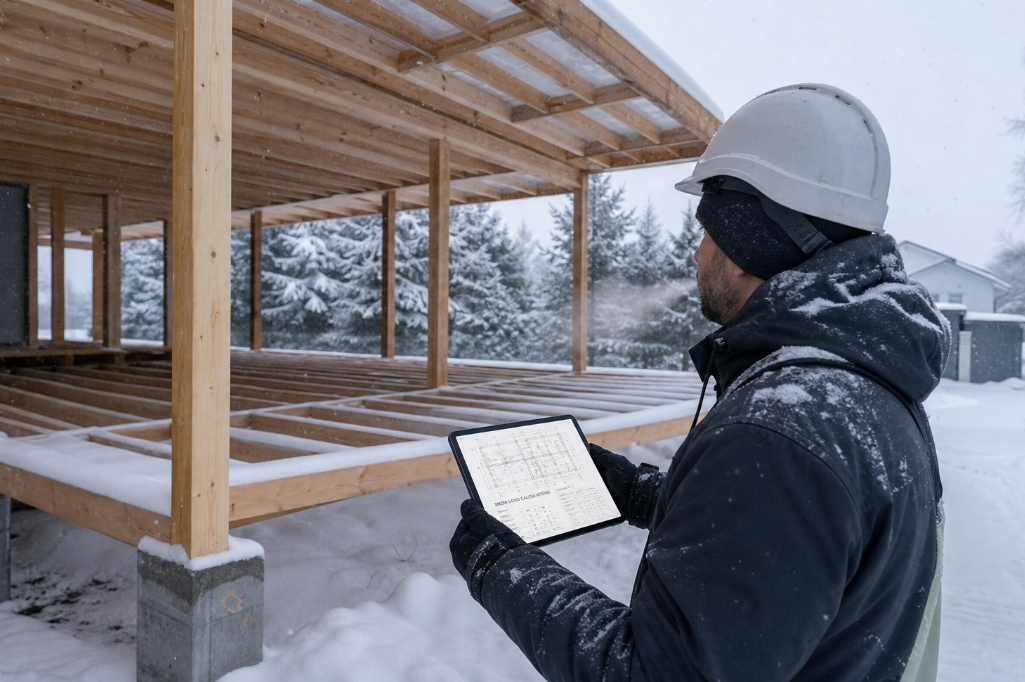
Building a deck in a snowy climate is not just about picking pretty boards and calling it a day. There is real engineering behind every joist and beam, and if your contractor cannot explain why your deck needs extra support in January, that is a problem. This is where communication matters just as much as construction skill. A good project manager does not just build. They translate numbers into plain English, so you actually understand what you are paying for.
What Snow Load Actually Means for Your Deck
Here is something a lot of homeowners do not realize. Building codes require decks to handle a certain amount of weight, called live load, which is usually 40 pounds per square foot under standard IRC guidelines. But snow load is a different animal. When winter hits, codes do not just add snow weight on top of live load. Instead, engineers use whichever number is higher.
In some northern states, ground snow load can climb past 300 pounds per square foot. That is not a typo. If you live somewhere like that, your deck framing needs serious muscle to hold up.
There is also something called snow drift, which happens when snow piles up against a taller part of the house, like near a roofline. This drift can push the actual load two to three times higher than the base number your area typically sees. So if your deck sits near a wall or under an overhang, this matters a lot more than most people think.
How Snow Load Shapes Material and Design Choices
Once the numbers are in, the design has to follow. Beams get bigger. Support posts get closer together. Joist spacing tightens up, especially in cold-weather regions where snow sits for weeks at a time.
In places with long winters, contractors often reduce the distance between footings and use stronger connectors at every joint. It is not glamorous work, but it is the kind of thing that keeps your deck standing after a heavy storm instead of sagging by spring.
Why This Should Come From Your Project Manager, Not Just the Crew
An engineer runs the numbers. That part is technical and honestly a little dry for most homeowners. But someone still has to take those numbers and turn them into something you can actually use, like a straight answer about cost, timeline, and what changes if your design shifts.
That job belongs to the project manager. When a PM skips this step or rushes through it, homeowners end up confused about why the budget jumped or why the timeline slipped. Poor communication on technical details is one of the most common reasons deck projects go sideways, not because the work was bad, but because nobody explained it clearly.
Four Communication Styles and Why They Matter
Not every project manager talks the same way, and that is actually a good thing because not every homeowner needs the same approach. Here is a simple breakdown that tends to hold up on real job sites.
|
Style |
Best For |
What It Looks Like |
|
Direct |
Homeowners who want fast decisions |
Short, clear answers with minimal fluff |
|
Analytical |
Clients who want to see the math |
Load calculations, code references, detailed breakdowns |
|
Supportive |
First time deck owners feeling nervous |
Patient explanations, extra reassurance |
|
Initiating |
Projects facing weather delays |
Energetic updates that keep morale up |
If you are the type who wants to see the ASCE 7 or IRC numbers behind your quote, you want an analytical PM. If you just want someone to tell you it is handled, direct works fine. There is no wrong style, just the wrong match.
How Good Communication Lowers Risk in Winter Builds
Cold-weather construction comes with more moving parts, and that means more chances for miscommunication. Regular check-ins matter here, even short ones. A quick call every few days beats one long silence followed by a surprise bill.
Documenting engineering decisions in writing also helps. If your PM tells you the beam size changed because of updated snow load numbers, get that in an email or text. It protects both sides.
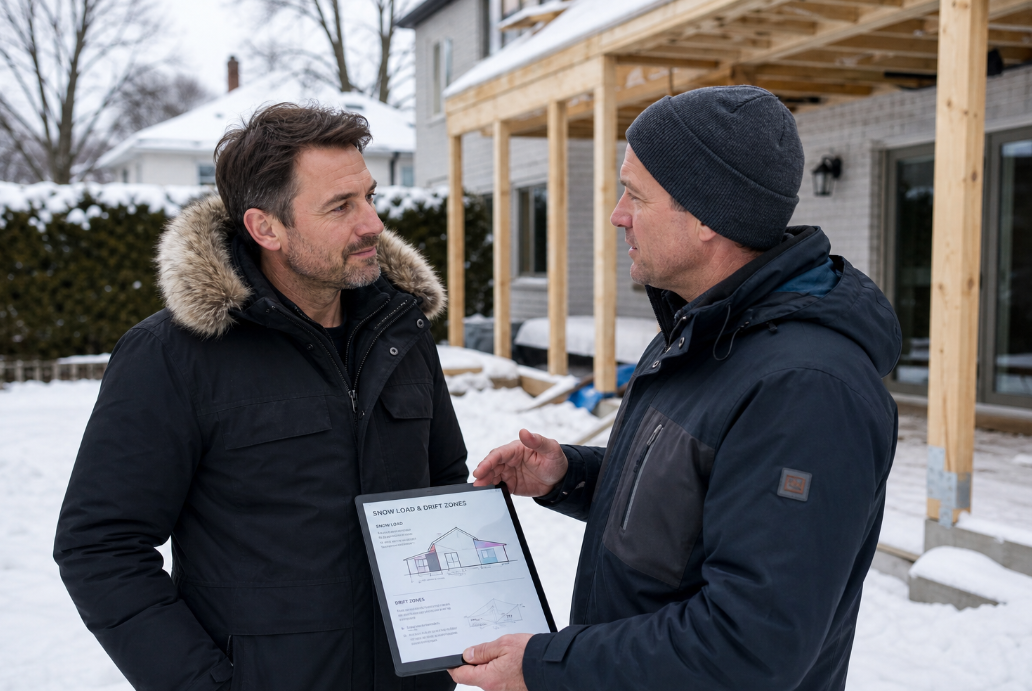
Visuals help too. A simple sketch showing where the snow drift zone is, or a diagram comparing joist spacing before and after, does more than a paragraph of technical talk ever could.
What to Ask Your Project Manager Before Work Starts
Before signing anything, ask a few direct questions. It saves headaches later.
- ✅ What snow load number is being used for my specific property
- ✅ How often will I get project updates, and through what method
- ✅ Who recalculates the load if I change the design mid-project
These three questions alone will tell you a lot about how organized your contractor really is.
Finding the best deck contractor is not just about who has the lowest quote or the nicest portfolio photos. It comes down to whether their team can explain complicated engineering decisions in a way that actually makes sense to you. A best deck contractor with a project manager who adapts their communication style, whether that is straight talk or detailed breakdowns, will save you time, money, and a lot of unnecessary stress once winter rolls around.