You can spend weeks researching pool pavers and still feel no closer to a decision, because after a while, every product page says exactly the same thing. Slip-resistant. Durable. Perfect for pool surrounds. The language is consistent enough to sound authoritative and vague enough to mean almost nothing. When you ask your contractor to explain the difference between two options, you get a preference, not a framework. That is the frustrating position a lot of Perth homeowners find themselves in six weeks out from installation: informed on the surface, uncertain underneath.
The problem with treating “slip-resistant” as a checkbox is that a wet pool deck full of running children is not a forgiving place to find out the claim was marketing copy rather than a measurable standard. The good news is that there are actual specifications behind the phrase, including ratings, surface classifications, and questions that will tell you far more than any product brochure. This guide walks through what those standards mean, how the main surface types compare in real conditions, and what to verify before you commit to a product, so you can make this decision with confidence rather than just hope. Starting with what the terminology actually means.
What “Slip-Resistant” Actually Means and How It’s Measured
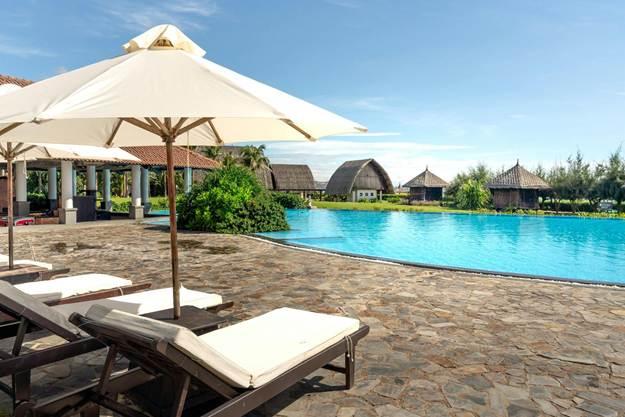
When a product page describes a paver as slip-resistant, that phrase has no regulatory weight on its own. In Australia, slip resistance is measured using a standardised test called the Pendulum Test, which assigns a wet area classification rating to the surface. The two ratings you need to know for a pool surround are P4 and P5. P4 is the minimum recommended for wet areas with normal foot traffic; P5 is the standard to look for when children will be using the space regularly.
The rating that matters is the one measured after sealing, not before. Many pavers perform well on slip resistance in their natural state, but the sealant applied to protect colour and surface can reduce that rating considerably. Before you commit to any product, ask specifically for the wet-area classification of the sealed finish. A supplier who can give you that number is one worth trusting.
The Four Surface Types: What They Offer and Where They Fall Short
Textured concrete is the most commonly specified option for residential pool surrounds in Perth, and with good reason. A quality textured concrete paver can achieve P5 ratings in its sealed state, holds colour well when manufactured consistently, and sits at a price point that doesn’t force you to compromise elsewhere in the build. The trade-off is that the texture requires periodic resealing to maintain both its appearance and its slip performance over time.
Exposed aggregate offers strong natural grip because the surface texture comes from the stone itself rather than an applied finish. This means slip performance is less dependent on sealing, which is a genuine advantage around water. Heat retention is the main drawback in a Perth context, as dark aggregate surfaces can become uncomfortably hot underfoot by mid-morning in summer, which limits how useful the space actually is on the days you most want to use it.
Travertine-finish reconstituted stone has become popular for its natural appearance, and products made from reconstituted limestone offer better consistency than purely natural stone. They stay noticeably cooler underfoot than concrete or aggregate, which matters in a climate where the pool area is in direct sun from October through April. The limitation is that the surface finish tends to be smoother, and wet slip ratings need to be verified carefully, because the visual appeal of the product can lead people to overlook this step.
Natural stone carries the highest aesthetic appeal and the highest variability. Slip ratings, thickness, and surface texture differ between slabs, which makes consistent installation harder and quality control more dependent on the supplier. For a household with young children, the combination of variable slip performance and higher cost makes natural stone a difficult recommendation unless the installation is handled by someone with direct experience specifying it for pool environments.
The Questions to Ask Before You Commit to a Product
You do not need to become a paving expert to make a good decision here. You need four questions, and you need to be comfortable with what happens when you ask them. The first is straightforward: can you provide the wet slip classification rating for this product in its sealed state? The second follows from it: does the sealant you recommend affect that rating, and by how much?
The third question addresses longevity: what is the expected surface life of this product under direct Perth sun, and what does maintenance look like at the five-year mark? The fourth is the one that separates products made to a standard from those that are not: is this product independently tested to Australian specifications? A contractor or supplier who answers these questions directly and specifically is worth continuing the conversation with. One who deflects, pivots to aesthetics, or tells you not to worry about the technical side is giving you useful information, just not the kind they intend to.
Matching the Right Paver to Your Pool Setup
For a household with young children and a full-sun pool area, the priority order is: verified wet slip rating, heat performance underfoot, and then durability and finish. A P5-rated textured concrete or exposed aggregate product made to Australian standards will serve that combination of factors better than a cheaper import that carries no independent test data, regardless of how it looks in a brochure.
The cost-quality tension in paving is real, but it tends to resolve clearly at the mid-range. Products manufactured locally to consistent thickness and tested to Australian standards outperform cheaper alternatives in surface longevity, colour stability, and structural integrity. Colour and finish consistency also matters beyond day one. A pool area where pavers have faded unevenly or chipped at the edges within a few years is a visible reminder of a decision made under pressure. Choosing a product with documented quality control behind it is the simplest way to avoid that outcome.
Make the Decision You Can Stand Behind
Choosing the right pool paver is not about finding the most impressive product in the range. It is about knowing what to verify before the installation date is locked in. The questions in this guide, around slip ratings, sealing, heat performance, and Australian standards, are the ones that separate a confident decision from one made under time pressure.
For Perth homeowners working through this process, Atlas Paving manufactures concrete and travertine pool pavers to Australian standards and can provide direct product advice before you commit. Get in touch to request a quote and talk through your options with someone who knows the product.